2026 BCRA Online Seminars via Zoom
Our monthly seminars are intended to promote the scientific importance of caves and karst,
and they describe ways in which BCRA supports cave research. Generally, these seminars are held on the second Monday of the month.
Please note that the talks start at 19:30 UTC+1
and not 20:00 as it says in some of our publicity info.
If you would like to offer a talk on a science
topic that you think would be of interest to a broad caver audience then please contact
Emily Tilby with a title and a few words about your suggested
content.
Click/Tap a link or scroll on down.
Past
Seminars in 2026
Click the pull-down icon to show/hide the list.
#1 — Mon 12 Jan 2026
Once upon a slime: snottites and biofilms in neutral mine drainage environments in Derbyshire
With: Jo White
Time: Mon 12-Jan 2026, 19:30 to 21:00 GMT
Location: Online

Snottites
Photo: John Gunn
Snottites resemble stalactites composed of jelly-like microbial biofilms. They are traditionally defined as living in highly acidic
environments (pH 0–1). However, Derbyshire mine drainage adits (soughs) are pH neutral. To discuss snottites from these
environments required a redefinition of snottites to include a wider range of pH environments. I therefore developed 3 models of snottite
formation to work towards a broader definition of snottites.
Snottites and other biofilms from pH neutral environments are also largely
unstudied. My PhD research focused on examining the microbial populations of pH neutral mine drainage environments, and their survival
mechanisms. Using a combination of geochemical and microbiological data I constructed metabolic cycles which suggest the processes that
microbial communities are using to survive in these nutrient-poor environments.
Our Seminar Programme
#2 — Mon 09 Feb 2026 ▼
UNESCO Programs for the Protection of Fragile Karst Resources: Thirty Years in the Fabulous Karst Landscapes of Southwest China
With: Chris Groves, University Distinguished Professor of Hydrogeology, Western Kentucky University
Time: Mon 09-Feb 2026, 19:30 to 21:00 GMT
Location: Online
To Watch: see Joining via Zoom.

Peak forest landscape in the Li River section of UNESCO's South China Karst World Heritage Site
Photo: Chris Groves
The 500,000 km2 area of southwest China's carbonate rock outcrops, home to some 80,000,000 mostly rural people, is certainly
among the world's great karst landscape/aquifer systems. The purpose of this presentation is to present a very personal narrative of 30
years of collaborative hydrogeology research throughout this region, with Institute of Karst Geology, and since 2008 the International
Research Center on Karst Under the auspices of UNESCO (IRCK), in Guilin. This work has also been tied to other UNESCO programs including the
International Geoscience Program (ICGP, after the program's original name the International Geological Correlation Program), the World
Heritage Convention, and the Man and the Biosphere Program.
An added benefit, in the author's view, is that in an uncertain world the value
of "scientific diplomacy", even at small scales, cannot be overestimated. UNESCO helps to create a more peaceful world by helping
people to
"understand one another and the world around them".
#3 — Mon 09 Mar 2026 ▲ ▼
Prehistoric cave burials from Heaning Wood, Cumbria and their European context
With: Rick Peterson, Reader in Archaeology, University of Lancashire
Time: Mon 09-Mar 2026, 19:30 to 21:00 GMT
Location: Online
To Watch: see Joining via Zoom.
POSTPONED until April. Apologies for the short notice.
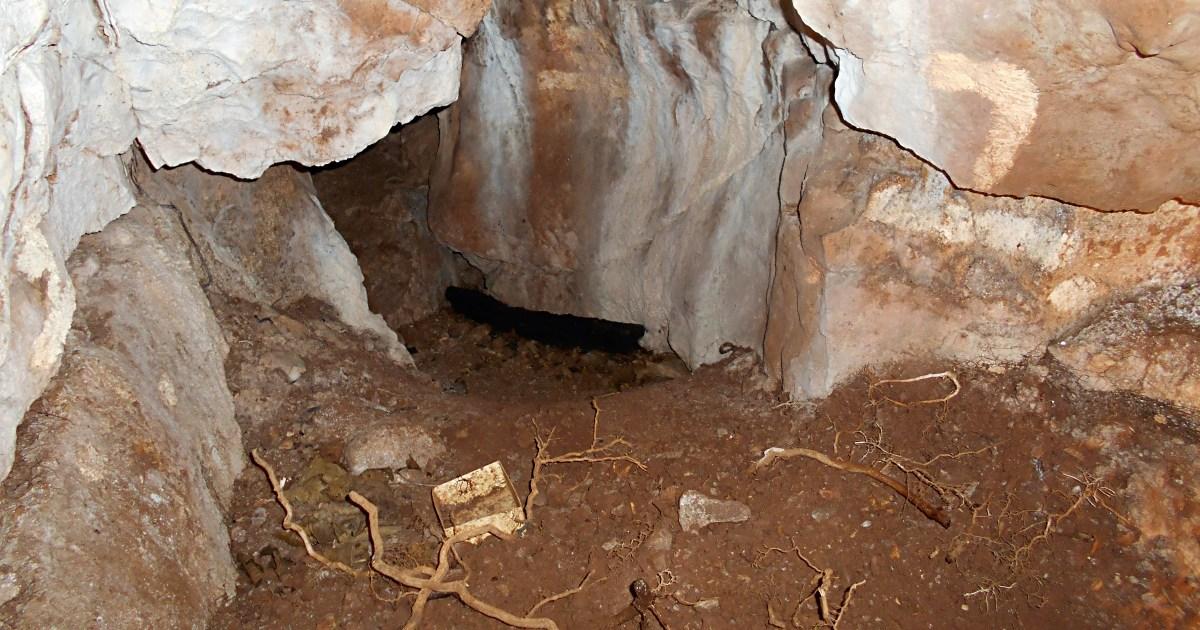
Interior view of the main chamber of Heaning Wood Bone Cave
Photo: Rick Peterson
Excavation of Heaning Wood Bone Cave, Great Urswick, Cumbria has produced an assemblage of human remains and prehistoric artefacts showing
that the cave was used for burial at three periods in the prehistoric past: the Early Mesolithic; the Early Neolithic and the Early Bronze
Age. Heaning Wood is just one example of many caves in North-West Europe which have evidence for burial and ritual activity at these dates.
This talk will examine what we know about these practices and what that might tell us about prehistoric beliefs about caves and the
underground world.
#4 — Mon 13 Apr 2026 ▲ ▼
Prehistoric cave burials from Heaning Wood, Cumbria and their European context
With: Rick Peterson, Reader in Archaeology, University of Lancashire
Time: Mon 13-Apr 2026, 19:30 to 21:00 BST
Location: Online
To Watch: see Joining via Zoom.
This is the seminar postponed from March 2026. Now Postponed till October.

Interior view of the main chamber of Heaning Wood Bone Cave
Photo: Rick Peterson
Excavation of Heaning Wood Bone Cave, Great Urswick, Cumbria has produced an assemblage of human remains and prehistoric artefacts showing
that the cave was used for burial at three periods in the prehistoric past: the Early Mesolithic; the Early Neolithic and the Early Bronze
Age. Heaning Wood is just one example of many caves in North-West Europe which have evidence for burial and ritual activity at these dates.
This talk will examine what we know about these practices and what that might tell us about prehistoric beliefs about caves and the
underground world.
#5 — Mon 11 May 2026 ▲ ▼
Shaping Knowledge Underground: Collaboration in Cave and Karst Research
With: Simone Sambento, PhD Researcher, University of Edinburgh
Time: Mon 11-May 2026, 19:30 to 21:00 BST
Location: Online
To Watch: see Joining via Zoom.

Cave of Goikoetxe
Photo: ADES Espeleologia Elkartea
Cave and karst research depends on collaboration. Scientists, amateur speleologists, heritage professionals, and voluntary contributors
routinely work together to explore, document, and interpret subterranean environments. However, the transdisciplinary collaborative efforts
that sustain this work often remain invisible.
This talk draws on ethnographic research conducted for a PhD on collaboration in cave and
karst research in the Basque Country. It examines two types of collaboration: informal collaborations grounded in continuity, trust, and
shared practice; and formal, project-based collaborations shaped by funding, regulation, and institutional accountability. Based on the
study of several collaborative projects and interviews with amateur speleologists, scientists from a range of disciplines, landowners, and
representatives of government administrations, the talk examines how these forms of collaboration interact in practice and how they shape
knowledge production, participation, responsibility, and visibility.
The aim of this talk is to make the often unseen structures of
collaboration in cave and karst research visible. By linking everyday practices of underground research with their wider institutional and
regulatory contexts, the talk invites participants to reflect on how collaboration is shaped and sustained, where it becomes fragile, and
what conditions help it endure.
#6 — Mon 08 Jun 2026 ▲ ▼
How Earth-Current Antennas Really Work
With: David Gibson, Formerly senior research fellow at Univ. of Exeter's Camborne School of Mines
Time: Mon 08-Jun 2026, 19:30 to 21:00 BST
Location: Online
To Watch: see Joining via Zoom.
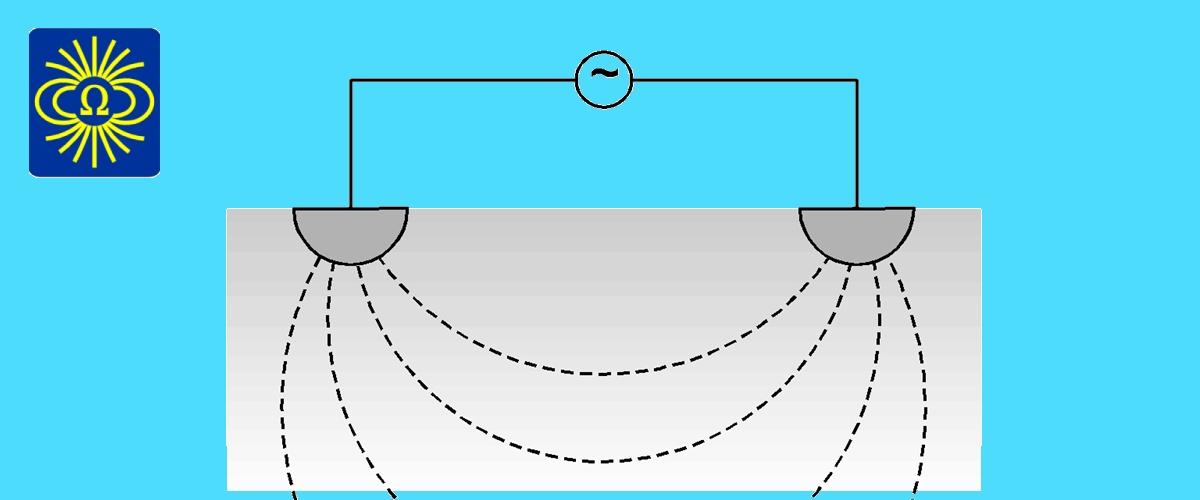
With cave radio equipment, there has been a trend away from the use of induction loop antennas to the use of so-called earth-current
antennas, i.e. long wires grounded at both ends. Both the HeyPhone and Nicola system use this type of antenna. However, the popular
explanation for how this antenna works is fallacious. The antenna does not operate by allowing the current to flow in a ‘big loop’ in the
ground and in fact, it does not depend, fundamentally, on current flow in the ground at all. The fact that the popular explanation is wrong
is important because, if we do not understand how the antenna works, it is difficult to know the best way to use it, or how to design a
better one.
Download and print this poster.
View this presentation in BCRA's document archive.
CREG's summer series of talks: BCRA runs a monthly programme of online cave science seminars,
broadcast using the Zoom platform. Generally, these are on the second Monday of the month, with a summer break. This summer, CREG (one of
BCRA's special interest groups) will be filling in with some talks on cave radio and electronics topics. We might try a slightly different
format, with several short contributions of 15 minutes each, rather than a single hour-long presentation but it depends on what is offered.
We are considering a mix of technical topics, practical discussions; possibly a historical look at through-the-earth communications and some
project guidelines for students.
If anyone would like to give a talk in this mini-series of CREG seminars – anything from a short 10
minute presentation to a one-hour in-depth lecture – please contact David Gibson via BCRA's Contact Page
(Search for Special Interest Groups).
#7 — Mon 13 Jul 2026 ▲ ▼
Current Problems in Cave Radio
With: David Gibson, Formerly senior research fellow at Univ. of Exeter's Camborne School of Mines
Time: Mon 13-Jul 2026, 19:30 to 21:00 BST
Location: Online
To Watch: see Joining via Zoom.
NB start time 19:30

A single-wire telephone being deployed
Photo: Mike Bedford
Although through-rock radio is now well-established, there are a number of puzzles still to answer. The first part of this talk will outline
some topics for further study. For example, the relative merit of loop versus line antennas is not straightforward to answer. Neither is the
merit of tuned v. untuned antennas or ferrite v. ceramic antennas. Other topics such as geophysical surveying using broadcast radio, and the
anisotropic properties of limestone could benefit from further work, and perhaps make useful student projects. The second part of the talk
will describe some of the practical problems of building equipment - waterproofing, battery choice, switches and connectors could all
benefit from some careful study. For example, why do supposedly waterproof boxes tend to end up with water inside them when left in a cave
for a long period? That, in itself, would make an interesting student project that could be investigated, underground, at BCRA's Cave
Science Centre in Poole's Cavern, Buxton.
Download and print this poster.
View
this presentation in BCRA's document archive.
CREG's summer series of talks: BCRA runs a monthly programme of
online cave science seminars, broadcast using the Zoom platform. Generally, these are on the second Monday of the month, with a summer
break. This summer, CREG (one of BCRA's special interest groups) will be filling in with some talks on cave radio and electronics topics. We
might try a slightly different format, with several short contributions of 15 minutes each, rather than a single hour-long presentation but
it depends on what is offered.
#8 — Mon 10 Aug 2026 ▲ ▼
Developments in Cave Radio
With: Ian Drummond
Time: Mon 10-Aug 2026, 19:30 to 21:00 UTC+1
To Watch: see Joining via Zoom.
This talk replaces the one originally advertised for this slot (which is postponed till next month). NB start time 19:30

Photo: Ian Drummond
Over the last 20 years in amateur ('ham') radio there have been some significant developments that have, so far, had little impact on the
design of cave radios. The developments are: WSJT-X digital software; the ability to generate digital signals directly at radio frequencies;
and the commercial availability of cheap, efficient radios. This talk will look at barriers to the use of this technology; why we might want
to use it; and the results of some experiments. The emphasis of the talk is on using technology that is readily available in the amateur
radio world to reduce cave radio development effort and cost, as well as improve performance.
View this presentation in BCRA's document archive.
CREG's summer series of talks: BCRA runs a monthly programme of online cave science seminars,
broadcast using the Zoom platform. Generally, these are on the second Monday of the month, with a summer break. This summer, CREG (one of
BCRA's special interest groups) will be filling in with some talks on cave radio and electronics topics.
#9 — Mon 14 Sep 2026 ▲ ▼
Historical Uses of Through-Rock Radio
With: David Gibson, Formerly senior research fellow at Univ. of Exeter's Camborne School of Mines
Time: Mon 14-Sep 2026, 19:30 to 21:00 UTC+1
To Watch: see Joining via Zoom.
This talk was originally scheduled for last month. NB start time 19:30

Edison, Dolbear and others had patents on devices not unlike those we use now for through-rock communications
Photo: Wikimedia Commons / Google patents
Through-rock communication using electrical methods has been around, in one form or another, for 150 years. The earth-return telephone is
the obvious example, but several wireless techniques have also been tried over the ages. This talk will give a quick run-down of the work of
various pioneers, as reported from time to time in the CREG journal, and will lead into a discussion of possible future
developments.
Download and print this poster.
CREG's summer series of talks:
BCRA runs a monthly programme of online cave science seminars, broadcast using the Zoom platform. Generally, these are on the second
Monday of the month, with a summer break. This summer, CREG (one of BCRA's special interest groups) will be filling in with some talks on
cave radio and electronics topics.
#10 — Mon 12 Oct 2026 ▲ ▼
Prehistoric cave burials from Heaning Wood, Cumbria and their European context
With: Rick Peterson, Reader in Archaeology, University of Lancashire
Time: Mon 12-Oct 2026, 19:30 to 21:00 BST
Location: Online
To Watch: see Joining via Zoom.
This is the seminar postponed from March 2026

Interior view of the main chamber of Heaning Wood Bone Cave
Photo: Rick Peterson
Excavation of Heaning Wood Bone Cave, Great Urswick, Cumbria has produced an assemblage of human remains and prehistoric artefacts showing
that the cave was used for burial at three periods in the prehistoric past: the Early Mesolithic; the Early Neolithic and the Early Bronze
Age. Heaning Wood is just one example of many caves in North-West Europe which have evidence for burial and ritual activity at these dates.
This talk will examine what we know about these practices and what that might tell us about prehistoric beliefs about caves and the
underground world.
#11 — Mon 09 Nov 2026 ▲ ▼
BCRA Cave Science Seminar
With: speaker to be announced
Time: Mon 09-Nov 2026, 19:30 to 21:00 UTC
Location: Online
To Watch: see Joining via Zoom.

BCRA runs a monthly programme of online cave science seminars, broadcast using the Zoom platform. Generally, these are on the second Monday
of the month, with a summer break.
#12 — Mon 14 Dec 2026 ▲
BCRA Cave Science Seminar
With: speaker to be announced
Time: Mon 14-Dec 2026, 19:30 to 21:00 UTC
Location: Online
To Watch: see Joining via Zoom.

BCRA runs a monthly programme of online cave science seminars, broadcast using the Zoom platform. Generally, these are on the second Monday
of the month, with a summer break.
Joining via Zoom
You are advised to download and install the Zoom program in advance, from
Zoom Client for Meetings . If you do
not do this in advance you will be prompted to do it when you join a meeting, and you could have
to spend a few minutes installing it and working out how to use it. It is also possible to attend
a Zoom meeting via a web browser, but this is not recommended unless you cannot get Zoom to
install properly.
. If you do
not do this in advance you will be prompted to do it when you join a meeting, and you could have
to spend a few minutes installing it and working out how to use it. It is also possible to attend
a Zoom meeting via a web browser, but this is not recommended unless you cannot get Zoom to
install properly.
Join the next BCRA Zoom Meeting
You can test your connection prior to
the meeting
- If you try to join the meeting before the host enables it, you could be left "in
limbo". Therefore, if your computer has not connected by, say, five minutes before the scheduled
start time, please log out and log back in again.
- If you cannot log in at all, please check our
Facebook page where
we will post any last-minute messages concerning, for example, any technical problems that we are
having.
- We might be using a Zoom passcode for this meeting. If so, it will be displayed
in a pop-up alert when you click on the link. You will need to note it down and enter it manually
when you are taken to the Zoom login page. Some devices might not be able to receive pop-up
alerts. Click here to
test whether you can receive these alerts. If you cannot then you will need to contact us, in
advance of the meeting.
- Please note that this event will not be recorded by BCRA. You can only watch it live,
via Zoom. The reasons for not recording our seminars are because a) obtaining the necessary
copyright clearances can be difficult, and time-consuming; and b) some content may be subject to
embargoes or other academic constraints. If you are interested in obtaining the content of a
particular talk you should contact the speaker privately.
Seminars Archive
View talks given in 2021, 2022 (none), 2023, 2024, 2025, 2026.
Notes for Staff
Notes for IT
- Slide timings are set in the JS variable $global_slide_times in
slides.js.
- The index number of the image to use for the Facebook scrape is set in the JS variable
$talk_for_OGI in seminar_data.js
- After Facebook has been allowed to scrape an image URL, if that image needs to be
changed, then it must be given a new URL in seminar_data.js. Thus if, initially,
$data["use_image"][7] = "/img_lib/talks23-7.jpg" then that must be updated by, say, adding
a version number (e.g. 23A-7) or Facebook will not attempt to re-fetch the file. If the
above syntax is preserved, the new "use_image" filename will still map to the correct actual file
name, as set in $data["image"] .
- Zoom link info written here
- When running locally a debug dump follows. (The HTTP_HOST is currently bcra.org.uk).
